You have an idea, a service to offer or a process that no longer fits in a spreadsheet. One question comes up quickly: do you need a website, a web app or a mobile app? The wrong choice is expensive, in either direction.
Here is the difference between these formats, when each one makes sense, and how to decide without being sold more than you need.
A website presents, an app lets people act
The line is simple. A website presents your business and makes it easy to get in touch: people read it, browse it, write to you or book. An app allows repeated actions: logging in with an account, finding your data, following a file, receiving a notification.
Put differently: if visitors come once to find you, you need a website. If they come back regularly to do something, an app may be justified.
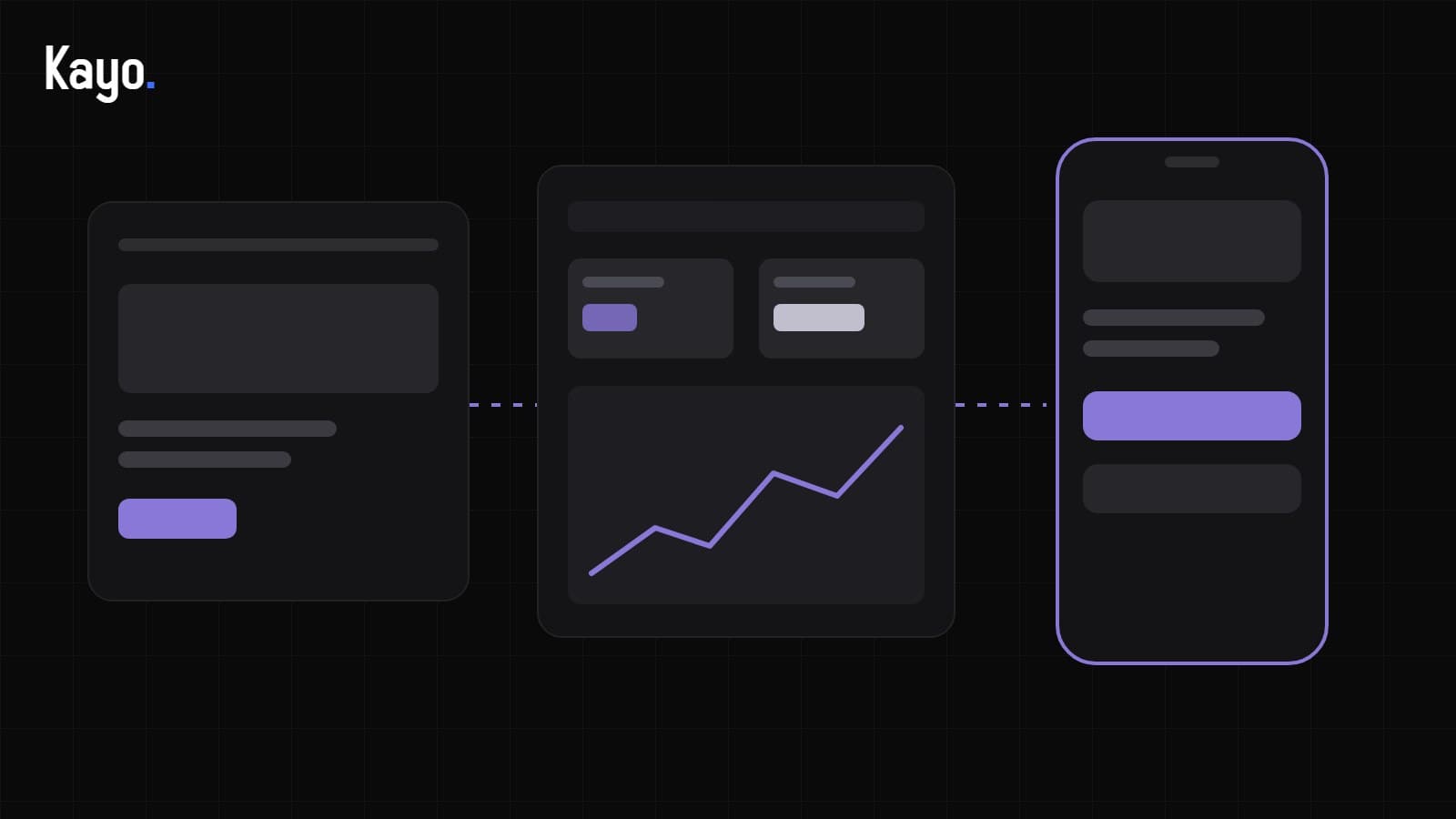
The four formats at a glance
- Website: presents your offer, makes you visible on Google, collects enquiries. It is the starting point for most businesses.
- Web app or business tool: software that opens in the browser, with accounts and data, designed for how one company works (case tracking, internal planning, customer area).
- Mobile app: installed on the phone through the App Store and Google Play. It makes sense for frequent use, notifications or phone features.
- SaaS: an online service, often by subscription, designed to be used by several companies. It is a product, not an internal tool.
When a website is enough (and it usually is)
A mobile-friendly website is often enough to present an offer and be found. It is enough in most of these situations:
- You want to be found on Google and present your services or products.
- The customer contacts you, books or orders, then has no need to come back to a dedicated area.
- You do not need each person to have their own account and their own data.
- You want to test an activity before investing more.
From €1,800, a custom website covers these needs. It can already include online booking or a shop without becoming an app.
When a web app becomes relevant
A web app makes sense when a process no longer fits in generic tools. The telltale signs:
- You re-enter the same information in several files or tools.
- Several people have to work on the same data, with different rights.
- Your customers need to find their documents, their history or the status of their file.
- An off-the-shelf tool forces you to work around the way you operate.
In that case, a custom business tool can be worth more than a pile of poorly connected subscriptions. This scope belongs to the BUILD pillar, and connecting it to your other tools belongs to EVOLVE.
When a mobile app is justified
A mobile app is not “a smaller website”. It makes sense when use is frequent and goes through the phone:
- Your users use it often, sometimes several times a week.
- It needs notifications to warn about an appointment or a change.
- It uses phone features (camera, location).
- Each user logs in with their account to find their information.
Worth knowing before you start: the Apple and Google developer accounts are opened in your name, their fees are yours, and the final approval belongs to the stores, not to us. A mobile app starts from €4,500 for the simplest scope.
When we talk about SaaS
If you want to sell the tool to other companies, it is no longer an internal tool but a product: accounts per company, access rights, subscription, ongoing development. A custom SaaS starts from €4,500 for its first version. If the need stays internal, a business tool is often enough.
Five questions to decide
- Who will use it: passing visitors, or people who come back with an account?
- What must they be able to do: read and get in touch, or act and find their data?
- How often: once, from time to time, or several times a week?
- What remains of what you have: a site or tool to keep, to connect, or to replace?
- What is the minimum scope that is useful for a first version?
If the answers stay “passing”, “read” and “once”, it is a website. The more they lean towards “account”, “act” and “often”, the more an app is justified.
The mistakes that cost the most
- Ordering a mobile app when a website with booking would have been enough.
- Wanting everything in the first version: the wider the scope, the higher the price and the timeline.
- Forgetting third-party costs (developer accounts, hosting, database, sending notifications) that come on top of the quote.
- Planning nothing for afterwards: updates, changes, maintenance.
The right method: start with a simple version that contains the essentials, then add the next features, priced separately. This lets you learn from real users before investing more.
And the price?
The public starting prices are: website from €1,800, web app, mobile app and SaaS from €4,500. The final price depends on the features, the number of screens and the options, and it is written in a quote before we start. To put these figures in context for a website, read our guide How much does a website cost in Belgium?.
Where to start
- Write in one sentence what your website or tool must allow people to do.
- Note who will use it and how often.
- List what you already use today and what bothers you.
With these three answers, a 20-minute discussion is usually enough to know whether a website fits or an app is justified, and we will tell you plainly if a website is enough. You can book a 20-minute call. If you already have a website, the free pre-audit gives a first look at what to keep or evolve.