Not all chatbots work the same way.
Some follow a predefined script. Others use artificial intelligence to understand visitors’ requests and adapt their answers: these are AI chatbots.
At first glance, the two can look similar. Yet the way they work is very different.
Understanding this difference helps you choose a solution that truly fits your business.
The traditional chatbot works with scripts
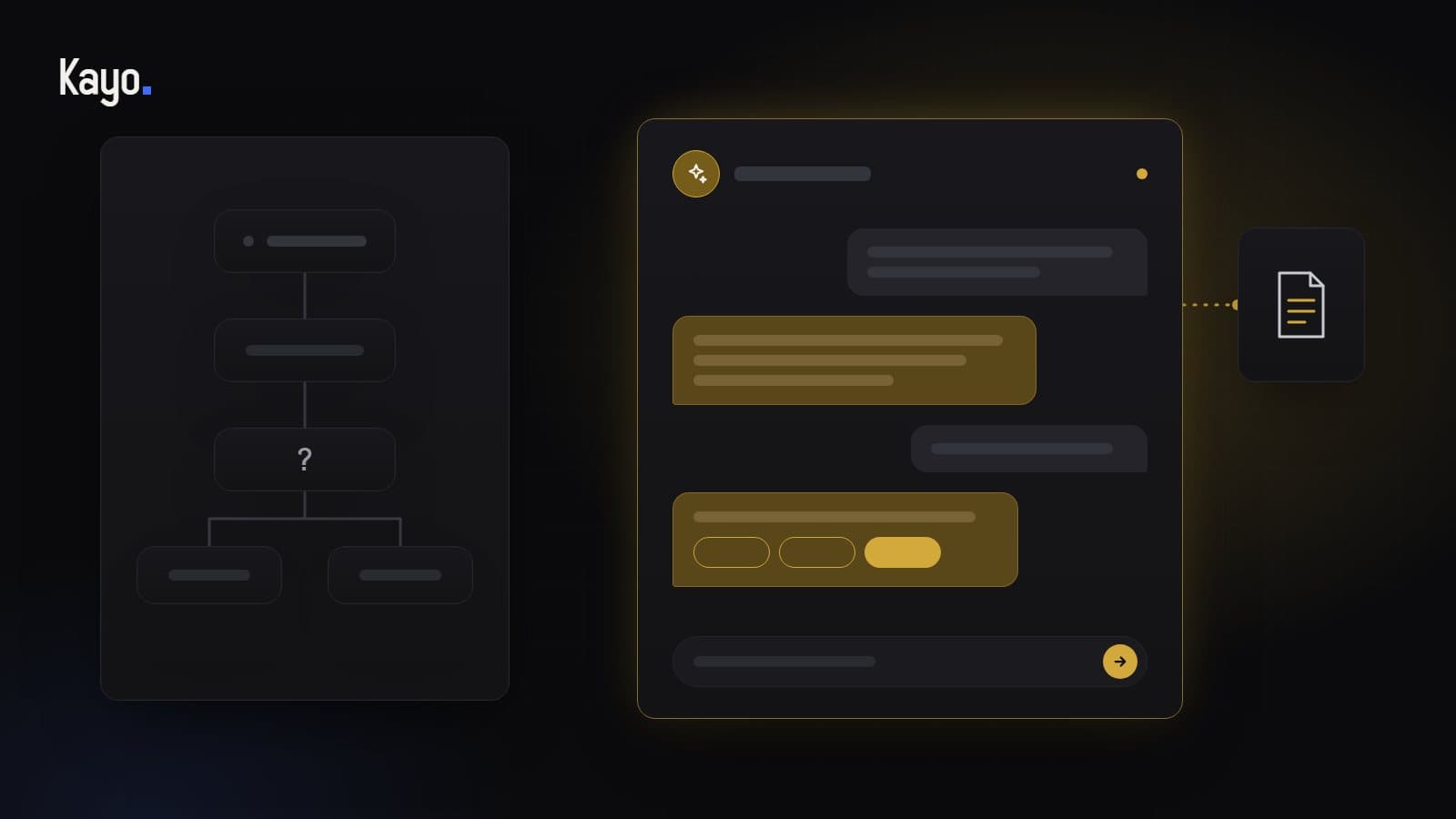
A traditional chatbot generally relies on predefined rules. The visitor picks an option. The chatbot shows an answer. Then it offers a new option.
For example: “What are you looking for?”
- Website creation
- SEO
- Advertising
- Contact
The visitor selects “SEO”. The chatbot then displays the related information.
This approach works particularly well when requests are simple and predictable.
The AI chatbot understands more natural requests
With a chatbot that uses artificial intelligence, the visitor no longer has to follow a set path. They can write:
“I’m self-employed and my website gets traffic but almost nobody contacts me. Can you help?”
The system can understand that the request is probably about the site’s conversion. It can then ask follow-up questions or point to a suitable solution. The conversation becomes more natural.
An AI chatbot can use your company’s information
An intelligent chatbot doesn’t have to rely only on generic answers. It can be set up to draw on information specific to the business:
- Services
- FAQ
- Documentation
- Terms
- Catalogue
- Internal processes
This lets it answer in a far more precise context.
An AI chatbot also recognises intent
Two people can use different words to ask for almost the same thing:
- “I’d like to redo my website.”
- “My site is old, I’d like to modernise it.”
- “I want to completely change my website.”
An AI-based system can understand that these three requests are probably about a website redesign. A traditional chatbot depends more on the words or choices planned in its script.
But AI doesn’t automatically mean better
A poorly configured AI chatbot can be more problematic than a simple one.
If it gives incorrect information, makes up answers or doesn’t know when to hand the conversation over to a human, the experience can quickly turn bad.
Technology alone isn’t enough. You also need to define what the chatbot can do, what information it can use and in which situations it must hand over.
When to use a traditional chatbot?
A traditional chatbot can be perfectly suited when:
- requests are very repetitive
- answers are simple
- the customer journey is predictable
- the information rarely changes
- the main goal is to guide visitors
It can then be simpler to control.
When to use an AI chatbot?
An AI chatbot becomes particularly interesting when:
- requests vary
- visitors phrase things differently
- the business holds a lot of information
- conversations need more context
- the chatbot has to qualify a prospect
- several tools need to be connected
In these situations, natural language understanding brings more flexibility.
The real potential: connecting the chatbot to your tools
The chatbot is only one part of the system. Imagine a prospect arrives on your website.
- They explain their project.
- The chatbot understands the request.
- It asks a few questions.
- It collects their details.
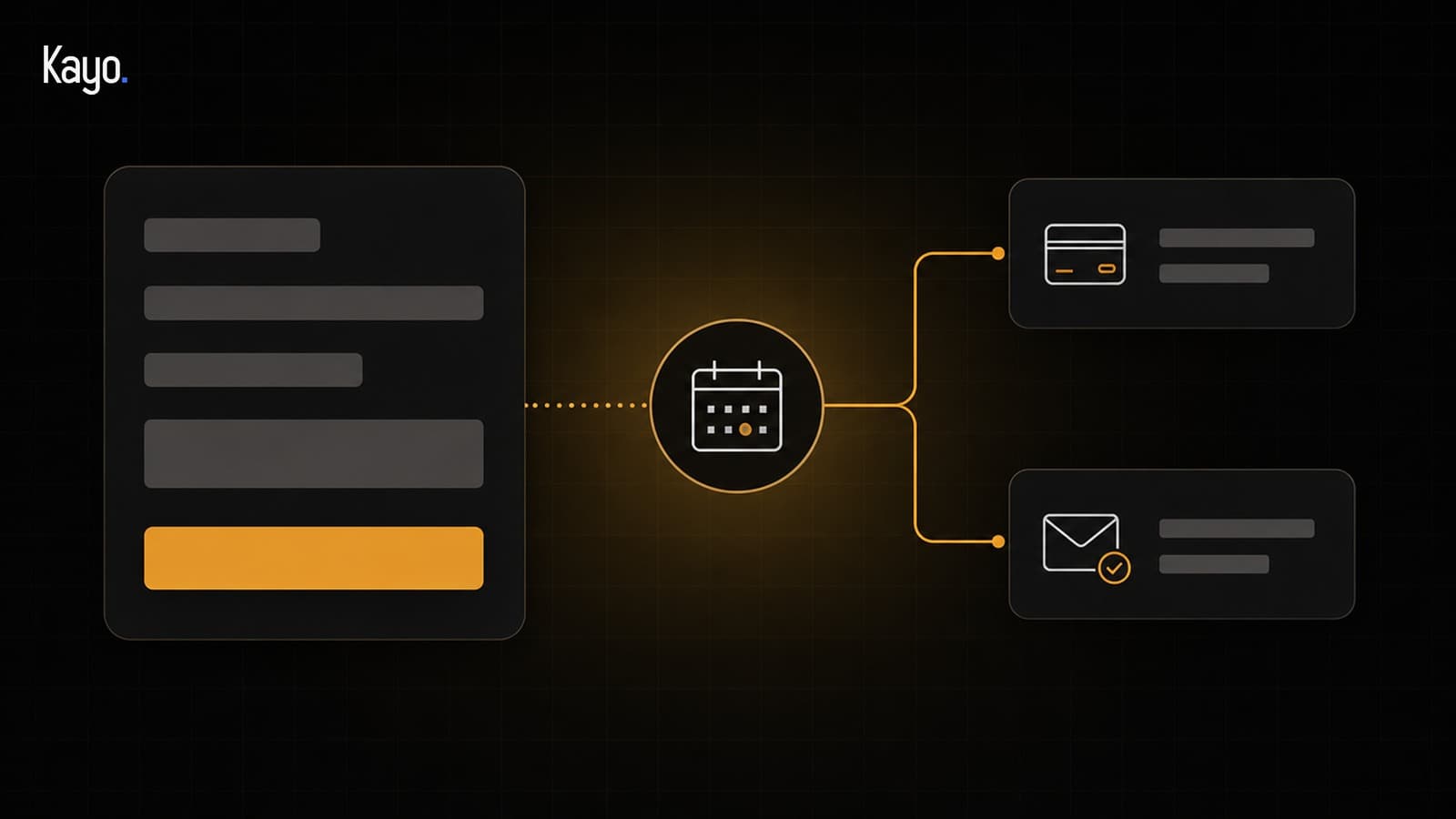
- It automatically creates the prospect in the CRM.
- It checks the salesperson’s availability.
- It offers an appointment.
- Then a confirmation is sent by email.
The visitor has hardly had to do anything. And your team receives an already structured request.
We cover more cases in our article on uses of a chatbot for business.
Before launching a chatbot: transparency, data and human oversight
A chatbot that talks to your visitors raises three practical questions. They are settled before go-live, not after.
- Telling the visitor they are talking to an AI: this is the transparency obligation of Article 50 of the European AI Regulation, applicable since 2 August 2026. Each party’s role is set in writing before the project starts.
- Knowing where the data goes: depending on how sensitive the information is, hosting is standard, light EU or guaranteed EU, agreed in the quote. Personal data is processed only with your agreement, under a data processing agreement (DPA).
- Keeping control: no decision is automated without human oversight, and an AI model never guarantees the accuracy of its answers.
At Kayo, these points are framed with you before work starts. You will find the scope and the limits on our chatbot page.
Traditional chatbot or AI chatbot?
So there is no universal solution. The choice depends on the problem the business is trying to solve.
A simple chatbot can be enough for a very specific journey. An AI chatbot becomes more relevant when conversations are more open-ended and several processes need to be connected.
At Kayo, we first seek to understand the customer journey before choosing the technology.
Because the best chatbot isn’t necessarily the one that uses the most artificial intelligence. It’s the one that really solves a problem for the business and for its customers.